Spring/Fall Water Levels
2026 Spring Water Levels
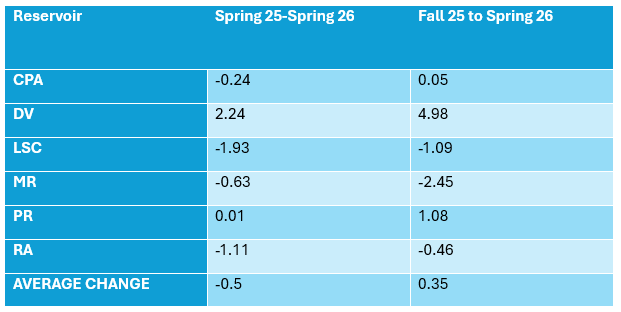
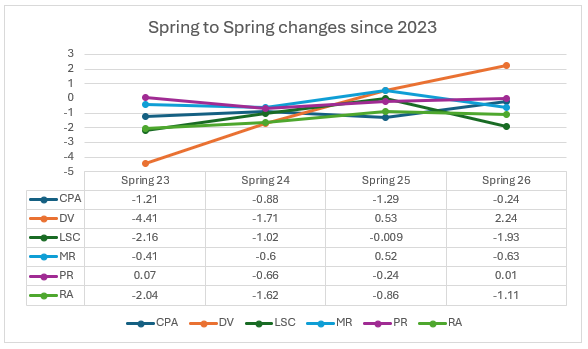
The 2026 Spring Water levels are complete! From Spring 2025 to Spring 2026, average levels across the District DECLINED by approximately half a foot (0.5 feet). Platte River increased by 0.15 foot as did Dwight-Valparaiso by 2.25 feet, however, the rest of the reservoirs decreased.
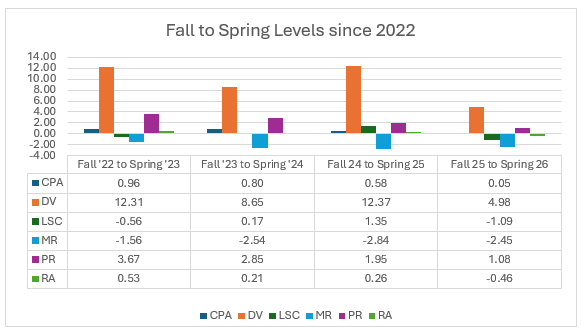
From Fall 2025 to Spring 2026, average water levels across the District increased by 0.35 feet. The largest increase came in the Dwight-Valparaiso reservoir with an average increase of nearly 5 feet. This reservoir tends to rebound quickly after pumping season due to it being a confined aquifer. The Missouri River reservoir, Lower Salt Creek, and Remaining Area showed a decrease since last fall. Lack of winter moisture from the Fall of 2025 to Spring 2026 has contributed to declines in shallower aquifers such as Lower Salt Creek.
Spring 2026 Charts & Graphs
2025 Fall Water Levels
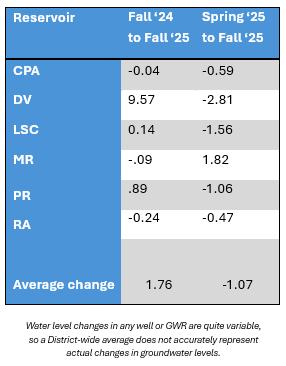
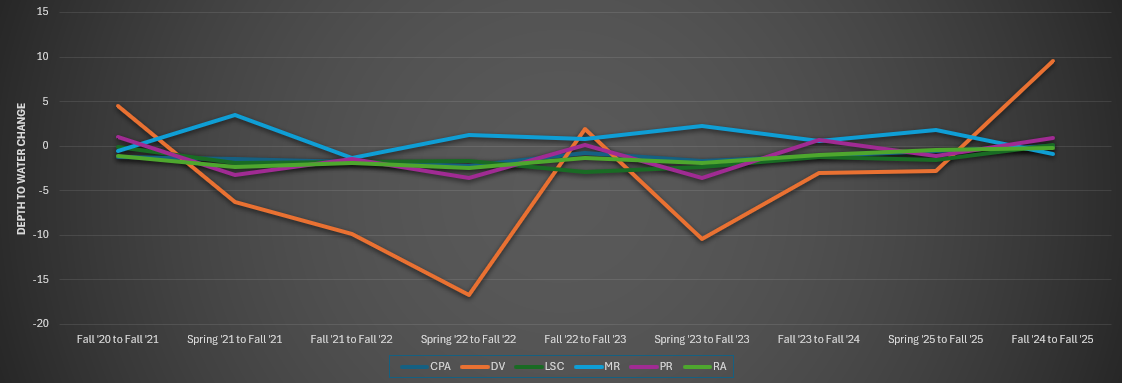
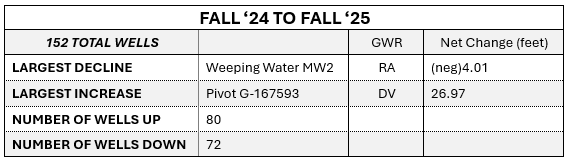
The 2025 Fall Water levels are complete. Fall '24 to Fall '25 numbers are UP (Approximately 1 3/4 ft on average over the District as a whole). Crete-Princeton-Adams, Missouri River, and the Remaining Area are all down. Dwight-Valparaiso gained more than 9 feet in elevation compared to Fall 2024. Lower Salt Creek and Platte River are slightly UP.
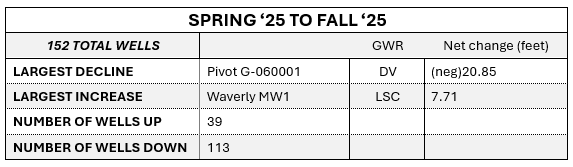
The Spring '25 to Fall '25 average change in water levels over the entire District was a decrease of 1.07 feet, although the Missouri River Groundwater Reservoir showed a slight average increase.
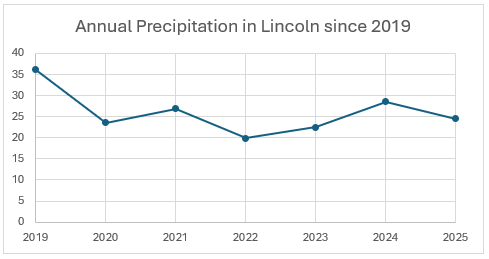
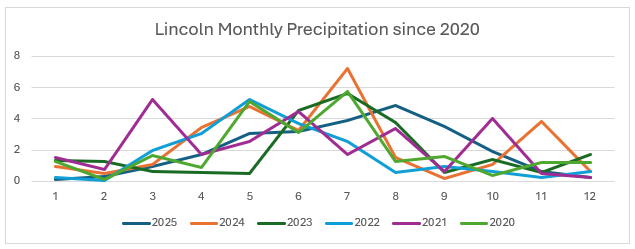
Missouri River GWR and Platte River GWR levels are very dependent on their respective river flows. The Dwight-Valparaiso Groundwater Reservoir showed the largest decrease in water level from Spring to Fall. Increased water pumping during the irrigation season, along with geological confinement, leads to the seasonal declines seen in that area. Lincoln averages 29.34 inches of rain per year, and we currently sit at 24.24 according to the University of Nebraska. 2025 started very dry with very little winter precipitation. Nearly 17 inches of 2025 precipitation total came in the months of April-August. Timely rain in the summer helped growers use less water than previous years.
Fall 2025 Charts & Graphs